Fairfield Apartments for Rent in Raleigh, NC
Our offerings
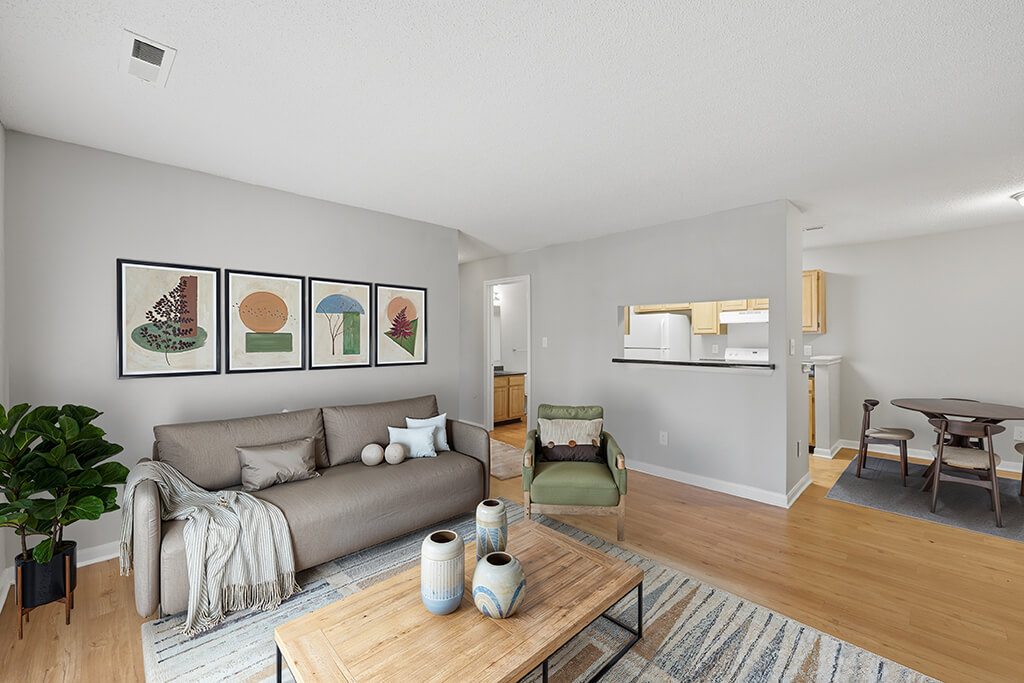
Greens of Pine Glen Apartments
Durham, NC
Durham, NC 27713
955 - 1310 Sq. ft.
Benefits and Lifestyle in Raleigh
Here, it’s easy to move from quiet, shaded trails to the energy of a busy shopping plaza in just minutes. A pine‑scented cut‑through behind Lake Lynn suddenly opens into the bright storefronts and patios of North Hills, creating a blend of calm and convenience you feel throughout the area. Rooftop spots like Level7 sit only moments from the peaceful oaks at Laurel Hills Park, offering sunset views, open‑air dining, and a sense of escape without ever leaving the neighborhood. Across Midtown, courtyards strung with lights, local shops, and weekend pop‑ups make it simple to unwind, explore, or meet a friend. Long greenway routes offer shaded stretches for joggers and cyclists, while nearby Umstead trails give anyone a quick path into nature. Just beyond, communities like Brier Creek, Apex, Holly Springs, and Morrisville each add their own personality — from brick‑lined downtowns and outdoor concerts to parks, cafés, and everyday errands all within easy reach. Best of all, exploring it all is effortless. Whether you’re driving, biking the greenways, or hopping on the local bus, every corner feels connected and close.
Career Opportunities in Raleigh
Raleigh and the broader Triangle offer a well‑rounded job market shaped by technology, research, healthcare, education, and government. Research Triangle Park sits at the center of it all, with companies like IBM, Cisco, Biogen, and RTI International spread across wooded campuses where engineers, analysts, and researchers move between labs and offices. In Raleigh, growth clusters around downtown and North Hills, where tech firms, financial services, and startups share space with coworking hubs and renovated brick buildings that are now home to design teams, data groups, and creative agencies. Duke University and Duke Health, along with a strong biotech and pharmaceutical presence around the American Tobacco Campus, where old factories have been turned into modern offices and incubators, are core to Durham. Chapel Hill leverages UNC and its research network, playing roles in public health, education, and data science. Cary and Morrisville round out the landscape with corporate campuses and global tech companies like SAS Institute and Lenovo, offering steady paths in software, analytics, and project management.
Education in Raleigh
North Carolina State University anchors the city with leading programs in engineering, agriculture, design, and technology. Nearby Duke University in Durham is known for medical research, public policy, and its top‑ranked health system. The University of North Carolina at Chapel Hill adds depth, with strengths in public health, journalism, and the liberal arts, creating a trio of institutions that shape much of the region’s research and innovation. Smaller schools like Meredith College, William Peace University, and Shaw University, one of the nation’s oldest HBCUs, offer focus areas in the arts, sciences, and leadership. In Wake County, schools are consistently recognized for strong academic outcomes, while magnet programs offer advanced coursework, arts programs, and international studies tracks.
Culture and Entertainment in Raleigh
Downtown is Raleigh’s cultural hub with the Duke Energy Center for the Performing Arts, where touring Broadway shows, symphonies, and local productions share the calendar, and the North Carolina Museum of Art, whose galleries spill out into a sculpture park threaded with walking paths and weekend yoga classes. The Warehouse District adds its own energy with contemporary art at CAM Raleigh, small galleries, and converted industrial spaces that now host film screenings, maker markets, and community events. Live music runs through the region, from intimate shows at The Pour House and Lincoln Theatre to larger outdoor concerts at Red Hat Amphitheater and Koka Booth Amphitheatre in Cary, where people spread blankets across the lawn as the sun drops. The Durham Performing Arts Center is one of the most active theaters in the country, and the American Tobacco Campus fills the courtyards between old brick warehouses with concerts, festivals, and open‑air gatherings. Chapel Hill brings its own creative streak with venues like Cat’s Cradle and a long history of indie music, student‑driven arts, and small theaters.
Outdoor Recreation in Raleigh
Raleigh’s outdoor scene is shaped by its mix of wooded trails, big lakes, and easy‑to‑reach greenways that weave through neighborhoods and connect whole parts of the region. The Crabtree Creek Trail runs for miles beneath tall trees and quiet bridges, giving joggers and cyclists long stretches of shade. At the same time, the Neuse River Greenway opens into broad, scenic paths where people bike for miles, stop at overlooks, or take weekends outside along the water. Lake Johnson and Lake Wheeler offer calm spots for kayaking, paddleboarding, and fishing, with docks and rental sheds that make it easy to get on the water. Umstead State Park sits right between Raleigh and Durham, offering miles of soft‑surface trails, quiet loops, and shaded picnic spots that feel far from the city even though you’re only a few minutes from major roads. In Cary, Bond Park and the surrounding greenways add more places to run, bike, or take the dog out, while Apex Community Park and Holly Springs’ Bass Lake Park give easy access to lakeside paths and open fields. Durham rounds out the region with the Eno River State Park, where rocky trails, swimming holes, and suspension bridges offer a different kind of terrain and a quick escape into nature. Across the Triangle, the weather makes it easy to be outside most of the year; warm springs, long summers, and mild fall and winter days.
Dining and Shopping in Raleigh
Downtown mixes renovated brick buildings with places like Poole’s Diner and Bida Manda, where the scent of butter, herbs, and simmering broths drifts out onto the sidewalk, and shops like DECO Raleigh and Edge of Urge spill color into the street with handmade goods, local art, and shelves that feel like treasure hunts. North Hills blends national brands with local staples like Quail Ridge Books, where the air smells like paper and coffee, and open courtyards strung with lights where people linger after dinner, kids weave around fountains, and live music floats in on warm evenings. The Warehouse District adds its own texture with concrete floors, tall windows, and tucked‑away spots like Heirloom Brewshop, where espresso, steamed bao, and toasted sesame fill the room while vintage shops and small galleries sit just steps away. Over in the Village District is a quaint scene with bakeries, boutiques, and everyday essentials. Cary brings a newer energy with Fenton, where restaurants, fitness studios, and boutiques wrap around open plazas that fill with music, outdoor seating, and the low buzz of weekend crowds. Apex and Holly Springs offer slower, small‑town rhythms: local bakeries with warm pastries in the morning, gift shops with creaking wooden floors, and downtown blocks where you can wander with a latte and feel like you’ve stepped into a postcard. Morrisville rounds things out with international grocery stores and established spots like Sassool, where the smell of fresh pita and roasted spices drifts out the door, reminding you of how much variety sits within a short drive.
Transportation in Raleigh
Raleigh is easy to get around, with clear routes by car, bus, bike, and trail. I‑40 and I‑440 loop through the region and connect Raleigh to Cary, Durham, and Chapel Hill, while US‑1, US‑64, and NC‑540 link suburban areas like Apex, Holly Springs, and Morrisville to major employers and shopping districts. Most people drive, and the short, well‑connected roads mean that even trips between cities often feel quicker than the map suggests. For those who prefer to leave the car behind, GoRaleigh and GoTriangle buses offer reliable service across downtown, NC State, Research Triangle Park, and into Durham and Chapel Hill, with park‑and‑ride lots that make commuting from the suburbs simple. Raleigh’s Union Station anchors Amtrak service for regional travel, and RDU International Airport. Greenways like the Crabtree Creek Trail and the Neuse River Greenway add another layer of mobility, giving people scenic routes that connect parks, neighborhoods, and even entire towns.
Top Attractions Near Your Raleigh Rental
Living in Raleigh means having access to iconic attractions and local favorites:
- North Carolina Museum of Art: Expansive galleries, outdoor sculpture park, and miles of walking paths
- Pullen Park: Historic amusement rides, pedal boats, playgrounds, and shady picnic areas near NC State
- Duke Energy Center for the Performing Arts: Home to Broadway tours, symphony performances, and local theater
- North Carolina Museum of Natural Sciences: One of the Southeast’s largest natural history museums, with immersive exhibits and live collections
- William B. Umstead State Park: Miles of wooded trails, lakes, and quiet picnic spots between Raleigh and Durham
- Neuse River Greenway: Scenic paved trail stretching for miles along the river, perfect for biking, running, and long walks
- Lake Johnson Park: Popular spot for kayaking, paddleboarding, fishing, and lakeside trails
- Durham Performing Arts Center (DPAC): One of the nation’s top theaters for Broadway shows, concerts, and comedy
- American Tobacco Campus (Durham): Renovated historic district with restaurants, events, and open‑air gathering spaces
- Eno River State Park (Durham): Rocky trails, suspension bridges, and swimming holes just minutes from downtown
- Fenton (Cary): Upscale retail, dining, fitness studios, and outdoor plazas with regular events
- Village District: Tree‑lined shopping and dining destination with boutiques, bakeries, and everyday essentials
- Marbles Kids Museum: Interactive, hands‑on museum for families in the heart of downtown Raleigh
- JC Raulston Arboretum: Nationally acclaimed garden with seasonal blooms, walking paths, and rare plant collections
- RDU International Airport Observation Park: Unique local favorite for watching planes take off with skyline views
Your Trusted Choice for Apartment Rentals in Raleigh
Finding apartments for rent in Raleigh is about more than floor plans; it’s about choosing a community and a management team you can rely on. Fairfield has been a trusted name in housing for over 40 years. Our apartments are well‑maintained, located in desirable neighborhoods across Raleigh and the surrounding Triangle, and supported by friendly, responsive on‑site teams who take pride in creating a welcoming place to live.
Fairfield apartments in Raleigh often include fitness centers, pools, coworking lounges, and pet‑friendly amenities that make home feel comfortable and convenient. Through our Living Green® program, many communities also feature energy‑efficient appliances, recycling programs, water‑wise landscaping, and EV charging stations. These thoughtful touches support a more sustainable lifestyle.
We’re proud that residents consistently rate our communities highly for satisfaction, and we remain committed to delivering an outstanding living experience throughout the Raleigh area.
Rent an Apartment in Raleigh with Fairfield
Your Raleigh journey starts with finding the right place to call home. Fairfield makes it simple to explore apartments in Raleigh and the surrounding Triangle: browse our listings with photos, floor plans, and current pricing. If a community catches your eye, our leasing team is ready to answer questions or schedule a tour. With Fairfield, you can confidently take the next step toward living in your ideal Raleigh apartment.
Frequently Asked Questions About Our Rentals in Raleigh
What types of apartments does Fairfield offer in Raleigh?
Fairfield offers a wide range of apartments for rent in Raleigh and nearby areas such as Cary, Morrisville, and Durham, including studios, 1, 2, and 3 bedroom layouts. Each apartment features a well‑equipped kitchen, and many communities also offer thoughtful extras such as ample storage, in‑home laundry, and private outdoor spaces.
Are Fairfield apartments in Raleigh pet‑friendly?
Yes, most Fairfield rentals in the Raleigh area welcome cats and dogs. Many communities include pet‑focused amenities such as on‑site dog parks, pet washing stations, and easy access to nearby greenways and walking trails. Breed and size restrictions may apply, so be sure to check the specific pet policy for your chosen apartment community.
What lease terms are offered for Fairfield rentals in Raleigh?
Fairfield offers a variety of leasing options at many communities, with flexible terms to fit your lifestyle. Month‑to‑month extensions may be available after your initial lease. Contact the leasing office for current availability and details.
How does Fairfield support renters moving from outside Raleigh?
Fairfield provides detailed listings and flexible leasing options to make relocation easier. Our friendly leasing teams are available to assist with scheduling, virtual tours, and personalized guidance.
Are Fairfield communities located near major employers in Raleigh?
Yes. Living in Raleigh means being close to some of the Triangle’s most significant job centers. Downtown Raleigh and North Hills offer roles in technology, finance, and state government, while Research Triangle Park hosts major employers in biotech, engineering, and research. Nearby cities like Durham and Chapel Hill add opportunities in healthcare, education, and public policy through Duke University, UNC‑Chapel Hill, and their affiliated medical centers.
Are Fairfield communities located near major educational institutions in Raleigh?
Absolutely. Raleigh is home to North Carolina State University, Meredith College, and William Peace University, with Duke University and UNC‑Chapel Hill just a short drive away. Residents also benefit from strong public and private schools across Wake County and neighboring districts, including magnet programs, early college options, and highly regarded K–12 schools.
What’s the average commute time in Raleigh?
Commute times vary by location, but the average is around 25–30 minutes. Residents have access to major highways, including I‑40, I‑440, US‑1, and NC‑540, as well as GoRaleigh and GoTriangle bus routes that connect downtown, NC State, RTP, Durham, and Chapel Hill. RDU International Airport is centrally located, making regional and long‑distance travel convenient.
What is the cost of living like in Raleigh?
Raleigh’s cost of living is slightly above the national average. Still, many residents feel the trade‑off is worthwhile thanks to the region’s strong job market, outdoor recreation, cultural attractions, and overall quality of life. The Triangle offers a balance of opportunity, comfort, and community that appeals to many different types of people.
5355 Mira Sorrento Place,
Suite 100
San Diego, CA 92121
858.457.2123
Our Office Locations